
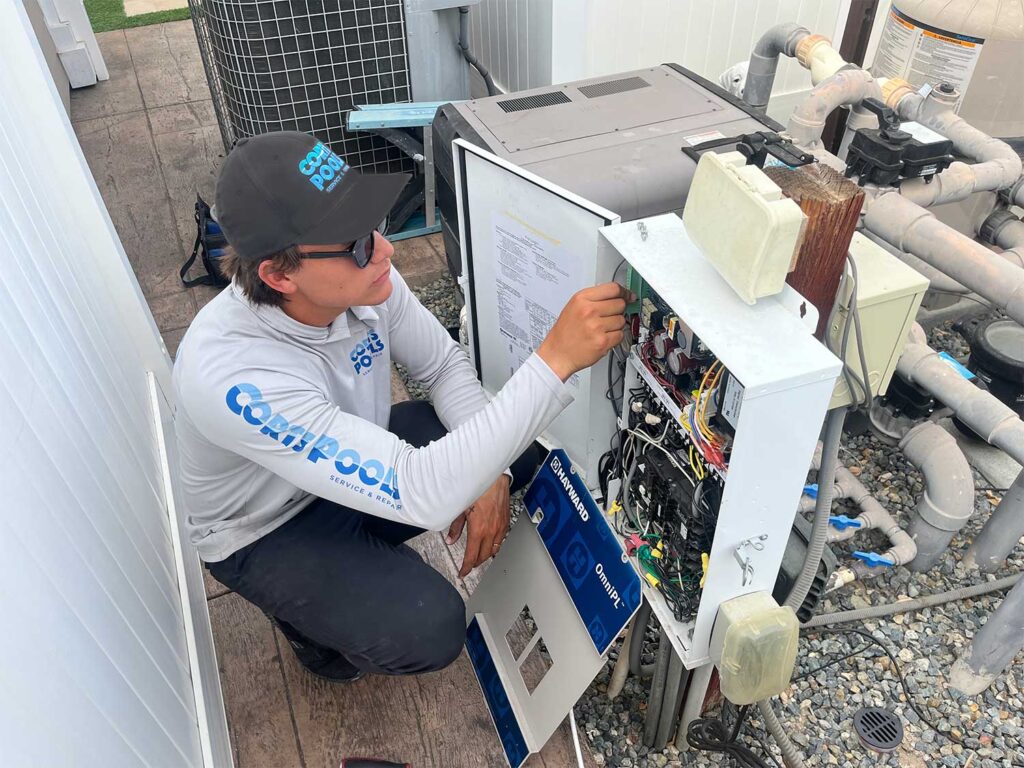
When to Repair vs. Replace Pool Equipment
One of the most common questions homeowners ask is when to repair vs replace pool equipment. Whether it’s a failing pump, broken filter, or struggling heater, deciding when to repair and when to replace can save you hundreds—or even thousands—of dollars long-term.
1. Should You Repair vs Replace Pool Equipment Based on Age?
Most pool equipment has an average life expectancy:
- Pumps: 7–10 years
- Filters: 10–15 years (tank); cartridges replaced every 1–2 years
- Heaters: 7–12 years
- Salt systems: 3–7 years (cells only, power centers last longer)
Rule of thumb:
If the equipment is over 70–75% of its expected lifespan, replacement is usually the smarter move — especially if major parts fail.
2. Repair vs Replace Pool Equipment — Cost Comparison Guide
A helpful guideline is the 50% rule:
If the repair cost is more than 50% of the price of a new unit, replacement makes more sense.
Example:
- $500 repair on a $900 pump → Replace it.
- $150 repair on a $900 pump → Repair it.
3. When to Repair vs Replace Pool Equipment Due to Frequent Repairs
If your equipment:
- Keeps needing repairs
- Has recurring problems
- Requires multiple service calls every year
…it’s no longer cost-effective. Replacing the unit provides peace of mind and prevents downtime during peak swim season.
4. How Warranties Affect Repair vs Replace Decisions
- New equipment comes with warranties (often 1–3 years or more).
- Older equipment repairs do not reset warranty coverage.
If a unit is out of warranty and costs keep stacking up, replacement becomes the safer long-term choice. Understanding when to repair vs replace pool equipment helps homeowners avoid throwing money at aging systems that no longer perform efficiently.
5. Energy Savings When You Replace Old Pool Equipment
Modern pool equipment is significantly more efficient:
- Variable-speed pumps can reduce energy costs by up to 80%
- New heaters start faster and burn cleaner
- New filtration systems maintain water quality better
Often, the energy savings alone can pay for the new equipment over time.
6. Safety Risks of Delaying Pool Equipment Replacement
Old equipment can become:
- A fire or electrical hazard
- A plumbing failure risk
- Unreliable during family swim season
New equipment runs quieter, safer, and consistently — giving homeowners confidence instead of constant worry.
7. When Repairs DO Make Sense
Repairs are usually the best option when:
✅ Equipment is relatively new
✅ Repair cost is under 30–40% of replacement cost
✅ Problem is isolated (switch, seal, capacitor, thermostat)
✅ Unit is still under warranty
8. Final Expert Advice
There’s no universal rule, but the goal is simple:
- Short-term thinking = endless repairs
- Long-term thinking = smart replacement timing
We always help customers choose the option that saves them the most money long-term, not the fastest short-term fix.
Need an Honest Equipment Evaluation?
At Cort’s Pools, we give straightforward assessments — no pressure, no upselling. We review repair options, replacement pricing, and energy-saving upgrades so you can make an informed decision.
📞 Call or text Cort’s Pools – (951)775-2678)
🌐 www.cortspools.com
Helpful Pool Care Resources:
- Learn how skipped maintenance creates costly repairs →
www.cortspools.com/hidden-cost-of-skipping-pool-maintenance - Get algae control tips and prevention advice →
www.cortspools.com/how-to-avoid-pool-problems-summer/ - See what our weekly pool service includes →
- www.cortspools.com/pool/service/menifee-ca/
For more technical background on pool equipment and energy efficiency
For more technical background on pool equipment and energy efficiency:
- EnergyStar Pool Pump Efficiency Guide
energystar.gov/products/pool_pumps - Hayward Pool Equipment Lifespan FAQ
hayward-pool.com